
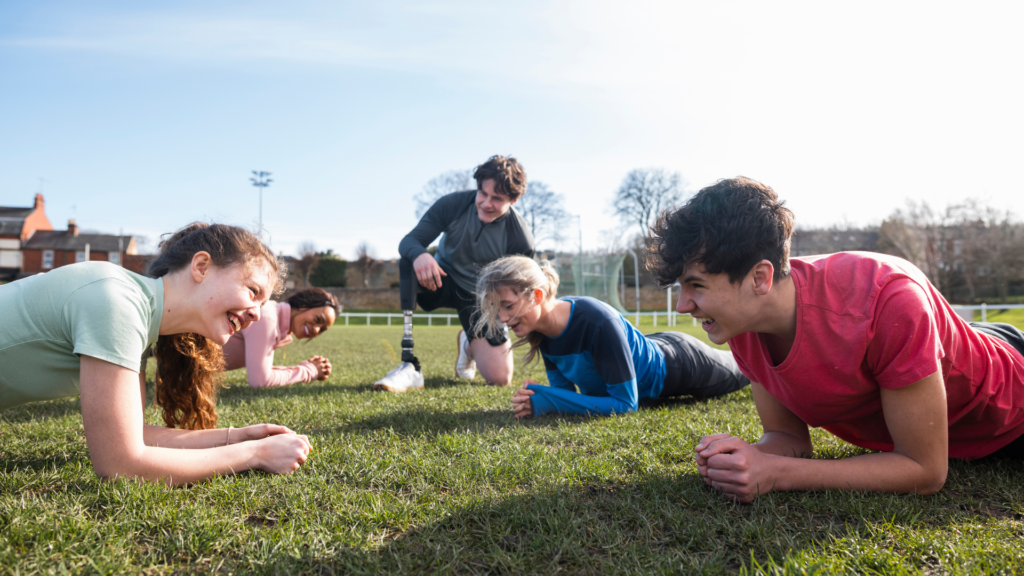
CIMSPA has been passed the baton of secretariat from Activity Alliance who have chaired the group for the past year.
Launched in 2022 and funded by Sport England, the EmployAbility Leisure project has been led by Aspire since the start. The project was created to enable more accessible and inclusive workplaces for disabled people, supporting them to find a job in the sport, physical activity and leisure workforce. With one in five of the working-age population comprising disabled people, the initiative addresses the significant employment gap in the sector.
A coalition of partners was set up to support the project, consisting of national organisations including Activity Alliance, CIMSPA and ukactive, as well as academics and disabled professionals. This strategic partner group has since worked collaboratively to advocate for sector careers as an attractive and achievable option for disabled people.
Following their successful InstructAbility programme, which helped hundreds of disabled people become qualified fitness professionals, Aspire released three guides as part of the launch of the EmployAbility Leisure project. The guides are designed to support the leisure industry to attract more disabled people to the workforce.
The guides are now embedded within the Moving to Inclusion framework, which provides a central hub for inclusive resources, featuring on the resources and support page of the Moving to Inclusion website. All employers, training providers and professionals are encouraged to use and share them, ensuring the leisure workforce reflects the diversity of the communities it serves.
The three guides are broken down as follows:
Guide A – Training and working in the fitness and leisure sector: for disabled people exploring careers in the industry.
Guide B – Training disabled learners in the fitness and leisure sector: for training providers and awarding bodies.
Guide C – Employing disabled people in the fitness and leisure sector: for employers seeking to become disability confident.
Over the past year, Activity Alliance has chaired the group. During this time, they have continued to build momentum around its shared commitment to ensure disabled people have equal opportunities to pursue careers in the physical activity and leisure sector. Working alongside the strategic partners group, the focus has shifted beyond the guides to work towards a sector-wide influence through coordinated communications. The objective is to strengthen alignment across organisations to maximise impact through integration of Equity, Diversity, and Inclusion (EDI) into core business operations and organisational strategies to improve recruitment, retention, and career progression for underrepresented groups.
Following the publication of the EmployAbility Leisure evaluation summary last year, partners have worked together to develop an action plan focused on three priorities with a renewed focus on sustainability:
- Promoting careers in leisure as viable and attractive to disabled people
- Building workforce confidence and knowledge around employing disabled people
- Encouraging inclusive workplace cultures across employers, training providers and awarding bodies
Members are embedding this action plan within their organisational priorities, helping to move inclusion into everyday practice.
CIMSPA’s position in the sector with both the workforce and organisations perfectly aligns with progressing the next phase of the EmployAbility Leisure project. As the work of the strategic partners group continues, CIMSPA will look to build on the important work it has already put in place and drive progress across the sector. CIMSPA’s strategy states that through its delivery we will champion diversity, providing the sector with a diverse and inclusive sport and physical activity workforce.
Colin Huffen, Associate Director for Regulation and Standards at CIMSPA, will be the secretariat for 2026 and said:
“I’m delighted we have the opportunity to take the baton from our friends at Activity Alliance. They’ve done a great job in their stewardship of the group, and we hope to continue the great work breaking down the barriers for disabled people in participating and working in leisure facilities.”