
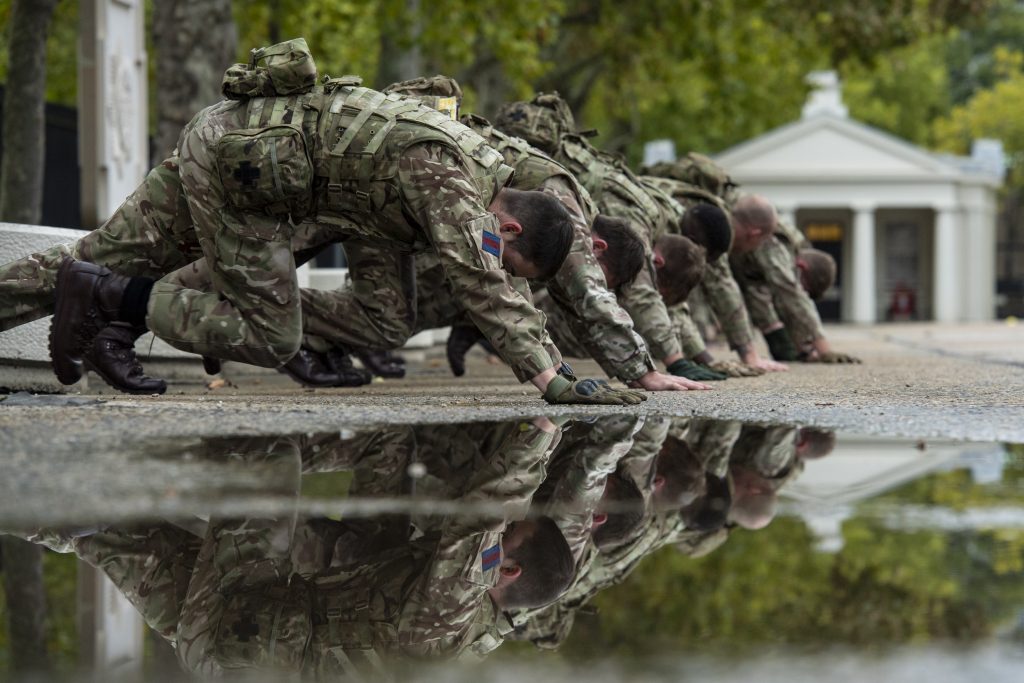
CIMSPA is working with the British Army to issue professional status to its physical training instructors
As a signee of the Armed Forces Covenant, CIMSPA is strongly committed to recognising the value of serving personnel, reservists and service leavers of the British Armed Forces. Taking further steps to support members of the armed forces in gaining professional recognition for their work in physical activity, CIMSPA has recently delivered awareness sessions and bespoke guidance around professional status. As a result, the first members of the British Army are now gaining professional status that demonstrates their knowledge, skills and impact in their physical activity role.
Hidden physical activity experts
While many fitness professionals find it tricky to demonstrate their expertise – even with common sector qualifications – many employers and members of the public aren’t even aware that physical activity practitioners are even employed by the armed forces. After serving their country, this can make it difficult for veterans to transition to civilian roles. Even with significant expertise, the training of these thousands of professionals isn’t what employers commonly understand as transferable.
In the British Army, the role of physical training instructor (PTI) is held by 3–5,000 soldiers. These individuals are responsible for ensuring the physical fitness of regiments and their readiness for the demands of military work. Up to 10% of physical training instructors belong to a dedicated unit – the Royal Army Physical Training Corps – while the rest are spread across a wide range of regiments supporting their own unit.
With the Army employing specialist fitness professionals since the Crimean War, it has long been a core priority of the military to keep soldiers “fit to fight”. Now, there are approximately 480 newly qualified physical training instructors each year, meaning that there is a growing number of sport and physical activity practitioners within the British Army looking for professional development and support beyond the military world.
How professional status supports military careers
Recognition by the sport and physical activity sector workforce’s chartered professional body serves as a key to accessing a successful civilian career transition for army practitioners. As the professional body for the sector that is recognised on the government’s Regulated Profession Register, CIMSPA offers nationally standardised professional status pathways.
Based on expert-led professional standards, these pathways enable PTIs to demonstrate their competence and areas of expertise in terms easily understood by civilians. While it has often been challenging to translate army rank and experience for civilian job applications, CIMSPA professional status is recognised by a wide range of employers in the sector.
As a mark of competency, it is used in role descriptions, and as a clear and quality-assured career development framework, it’s also used to plan staff progression and future training needs. By gaining professional status, British Army physical training instructors can unlock a supportive system for their career development and a simple way to show what they already know.
As well as a strong starting position for civilian life, professional status supports Army professionals to develop their knowledge within their current role. As part of the professional body, professional status holders gain access to regular webinars from accredited sector professionals as well as a wide range of quality-assured professional development resources and training.
From learning focused on topics from mental health to working with women and girls, there is a wide range of options for civilian-recognised training that remains practical within military contexts. Completing accredited training also provides opportunities for gaining higher professional statuses, providing motivation to develop and demonstrate growth. Achieving higher statuses can also enable smooth progression into senior sector roles.
How we connected with eligible practitioners
With little to no awareness of CIMSPA within the Ministry of Defence, the first step towards delivering professional recognition for Army PTIs was education. By engaging with those belonging to the Royal Army Physical Training Corps through their annual study weeks, we were able to increase understanding of what professional status can offer to practitioners within the Army.
Over five regional events in autumn 2025, we delivered targeted workshops to highlight the value and opportunity available to physical training instructors.
These sessions successfully engaged many PTIs. To ensure that those who expressed an interest were about to gain an appropriate professional status and the benefits that come with it, our professional services team provided tailored support.
Each PTI who has expressed an interest in professional status is receiving bespoke guidance to find a category that matches their skillset, with some being eligible to apply for chartered status already. From gathering evidence through to preparing for the chartered application process, these individuals will be supported at every step of the way. This will ensure that CIMSPA has a true understanding of their roles and expertise to best recognise their work through professional status.
Clare Dunn, Associate Director of Business Engagement at CIMSPA and ex-British Army service member, is a driving force in the work to connect with Army professionals:
“As we have already demonstrated through signing the Armed Forces Covenant in 2024, CIMSPA is proud to support current and previous military personnel working within physical activity roles.
Now that we are able to offer the fantastic benefits of professional status to these individuals, we are keen to ensure that they are able to access this clear recognition of their achievements and a smooth transition to a rewarding civilian career.
We are excited to welcome our first cohort of British Army practitioners into professional status and look forward to supporting them and many more.”
HQ RAPTC SO3 Research & Development sees the connection as successful so far, too:
“The collaboration between the RAPTC and CIMSPA marks a significant step forward in recognising the expertise and professionalism of our Physical Training Instructors. By achieving professional status, our PTIs not only gain well-deserved acknowledgment for their skills and dedication but also enhance their career prospects within and beyond the military. This initiative underscores our commitment to supporting the professional development of our personnel and ensuring their contributions are valued both in service and in civilian life.”
How we can support even more sector professionals
After a strong start in engaging British Army physical training instructors with the career-empowering tool of professional status, CIMSPA is keen to continue.
Alongside the British Army, there are many other industries with professionals working in unrecognised physical activity-focused roles. As well as naval and air force service members, individuals within the police force, fire services and many more physically demanding industries are responsible for supporting colleagues with their fitness.
This diverse range of roles available in sport and physical activity means that there are career opportunities in the sector for a wide range of individuals. However, it’s important for us to recognise these more hidden roles. Highlighting the expertise of these practitioners through professional status not only gives them the acknowledgment of their dedication that they deserve. It also gives external employers and the general public confidence that they can rely on the knowledge and skills of these professionals, enabling career progression and transferability of expertise.
While CIMSPA is yet to connect with these industries, our vision of shaping a recognised, valued and inclusive sport and physical activity sector that everyone can be a part of most certainly includes roles such as these.
If you would like to get involved and support the development and recognition of physical activity professionals in your industry, contact partners@cimspa.co.uk.
Image licensed under the Open Government Licence v3.0.